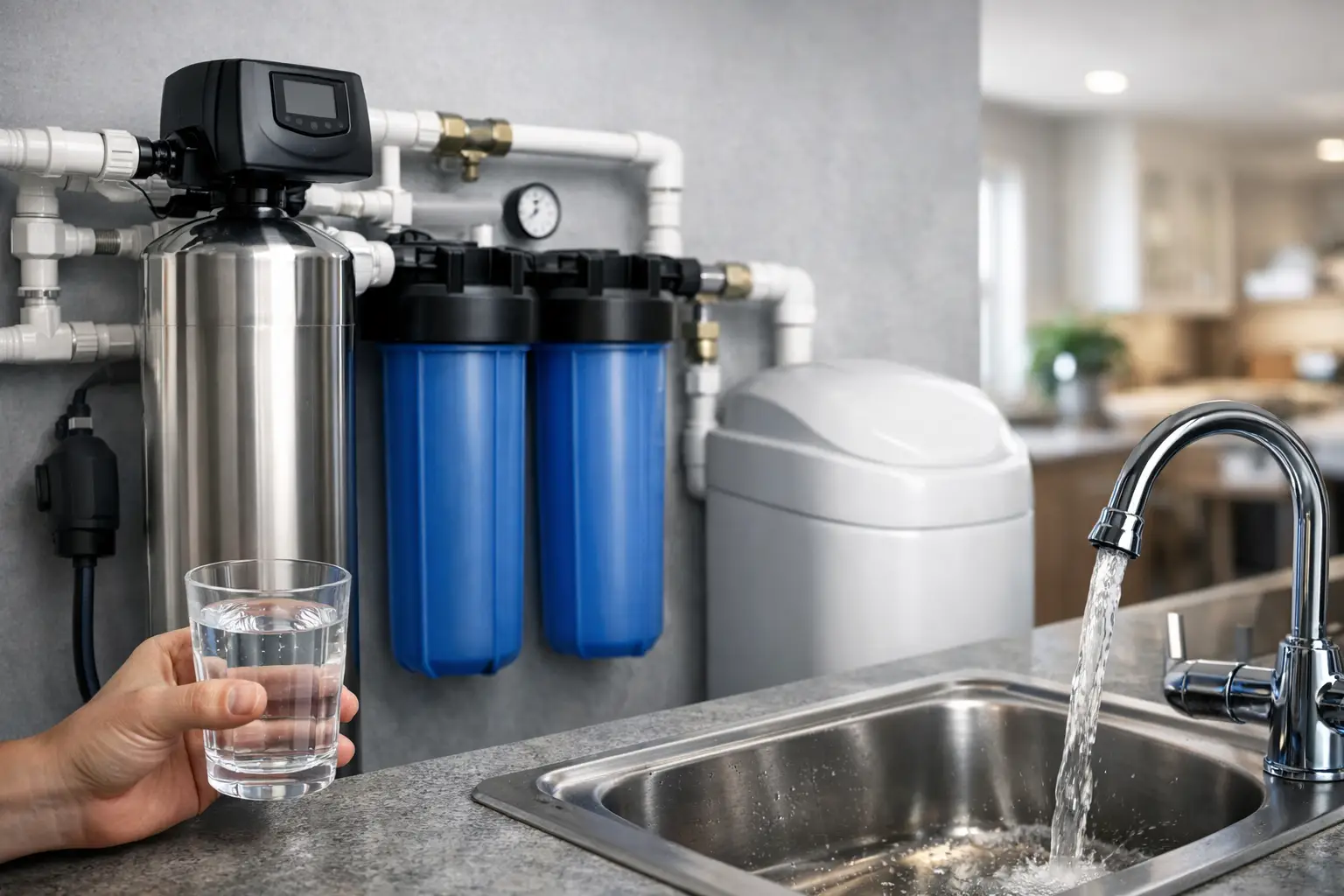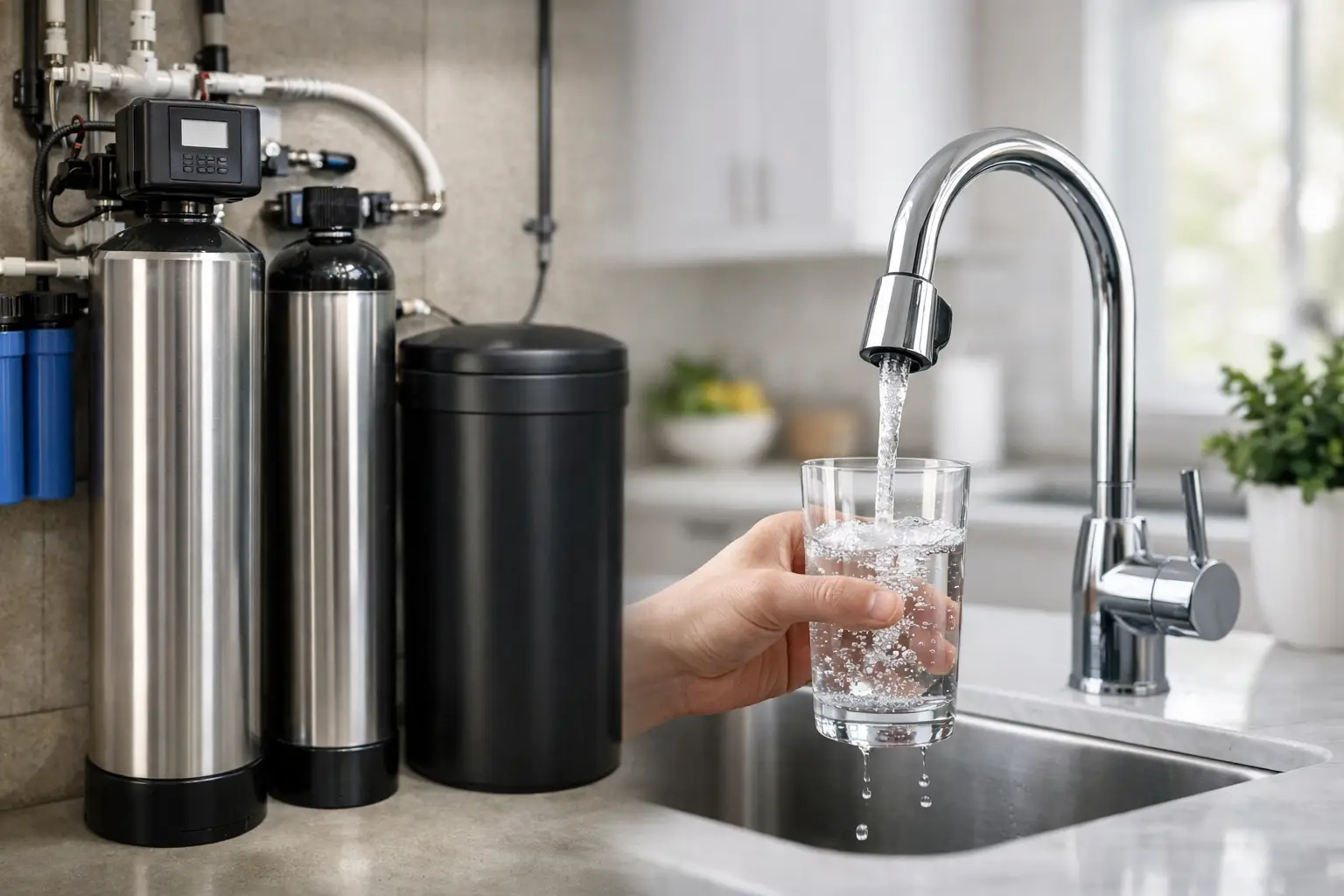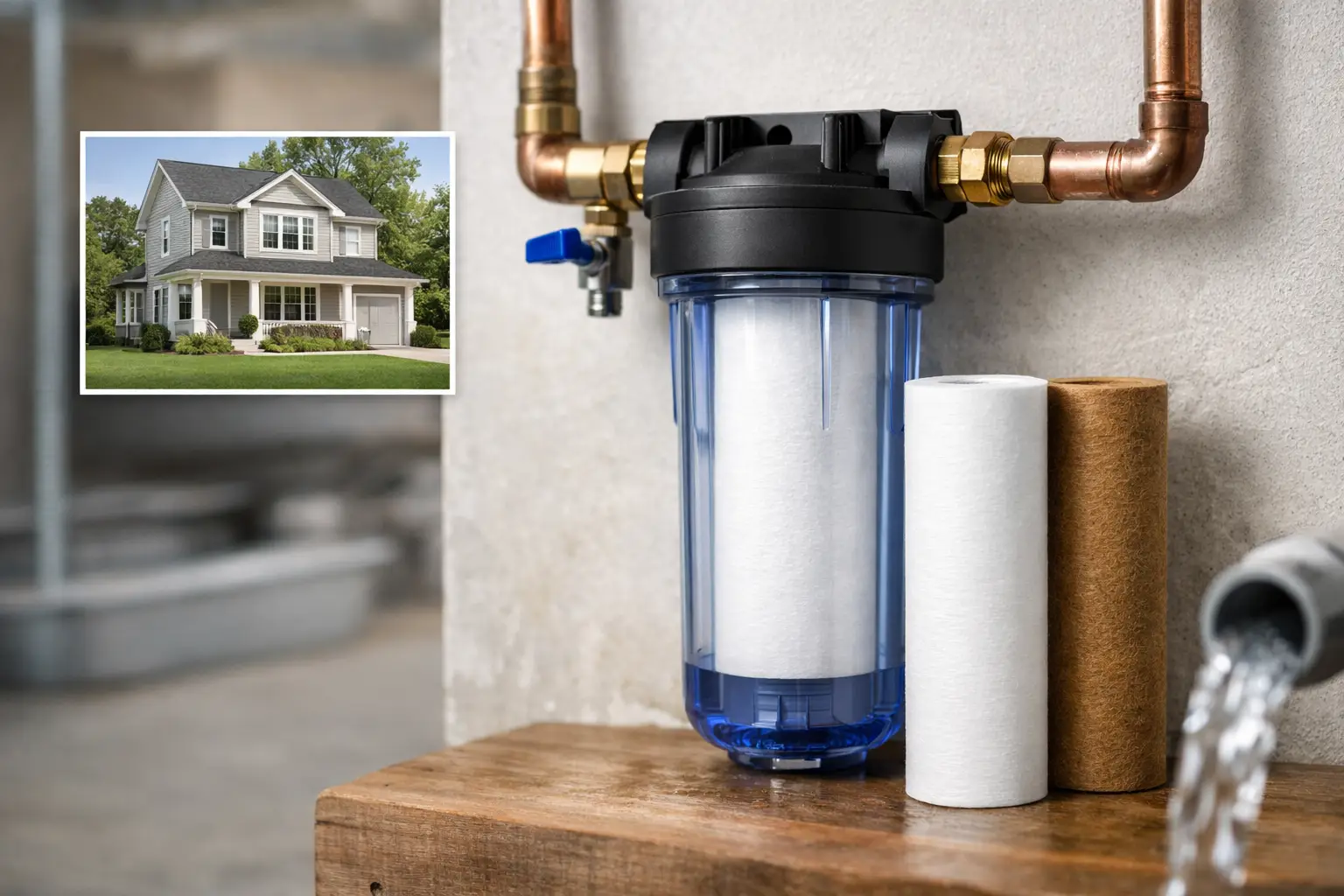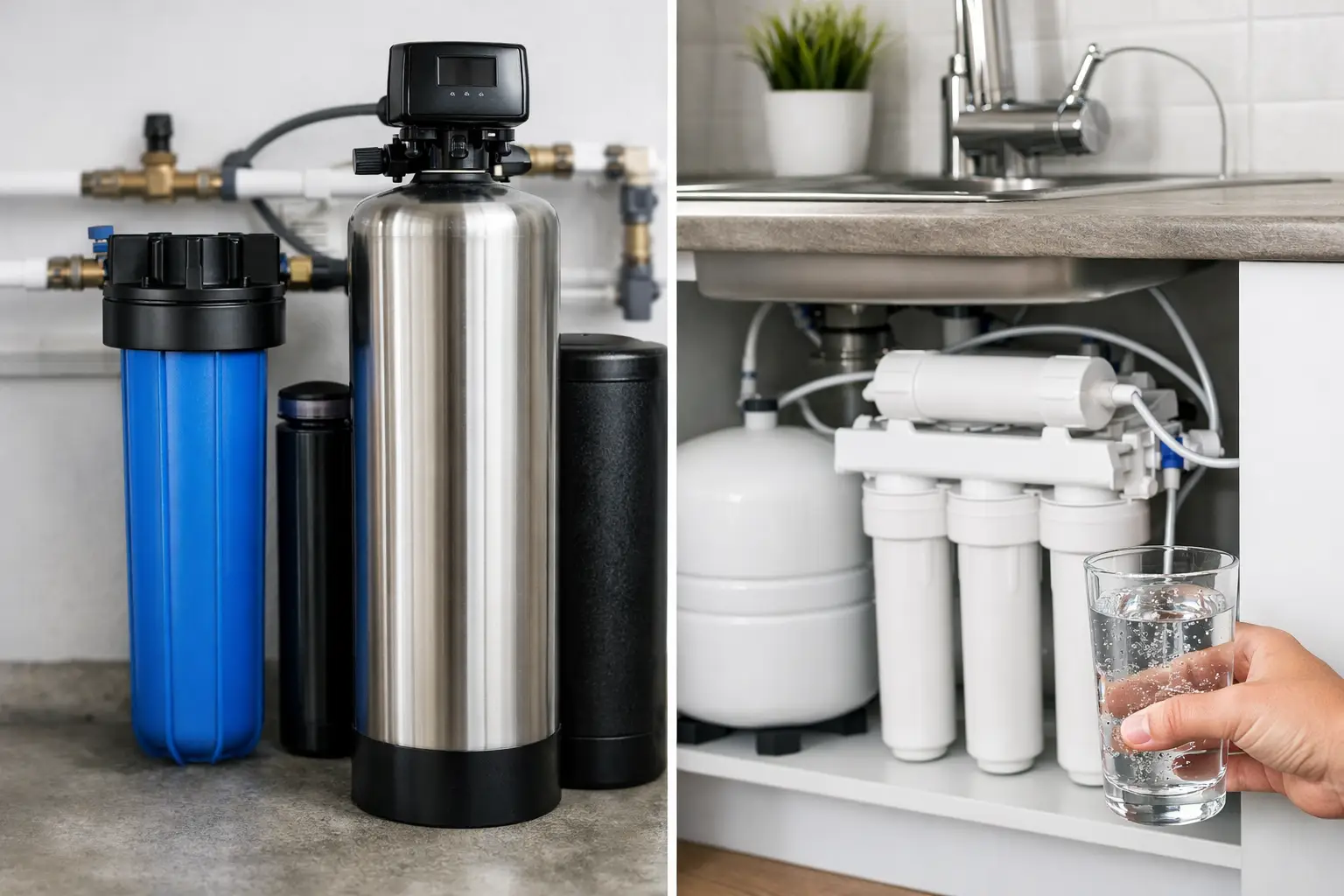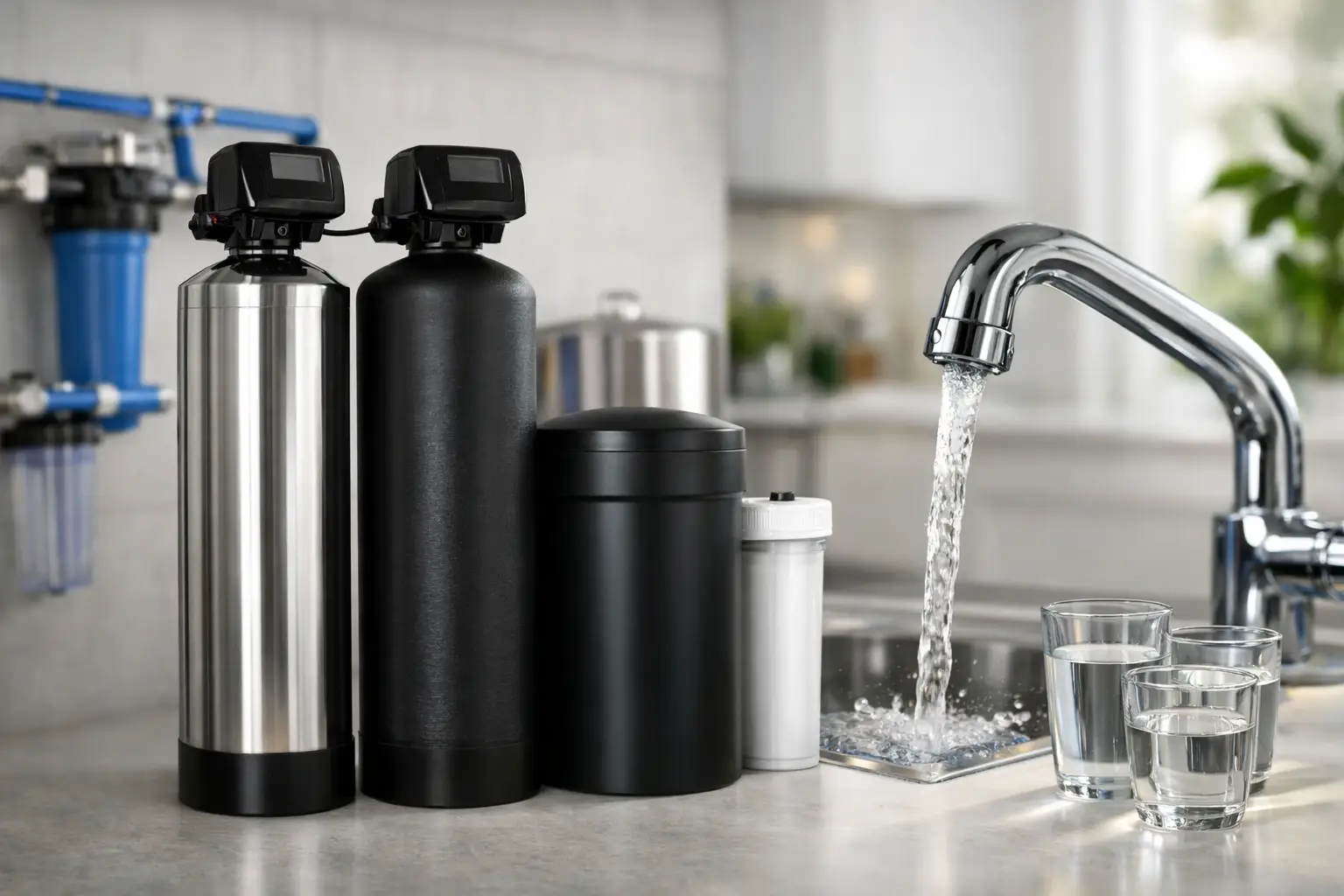


A water softener vs filter comparison shows that each system solves a different problem—softeners remove hardness minerals, while filters reduce contaminants like chlorine and sediment. Most homes benefit from using both together for complete water quality improvement.
When comparing a water softener vs filter, many homeowners assume one system can solve every water issue. In reality, each serves a very different purpose. A softener is designed to remove hardness minerals that cause scale buildup, while a filter targets contaminants that affect taste, odor, and clarity.
If your dishes have spots, your skin feels dry after showering, or your water smells like chlorine, you may be dealing with multiple water issues at once. That’s why understanding the difference—and when to combine both systems—is key to improving your home’s water quality.
What’s the Difference Between a Water Softener and a Filter?
A water softener removes hardness minerals, while a filter removes contaminants that affect water quality.
A water softener uses an ion exchange process to remove calcium and magnesium—minerals that cause scale buildup in pipes, appliances, and fixtures. This helps extend the life of your plumbing and improves soap performance.
A water filter, on the other hand, targets substances like chlorine, sediment, and chemical byproducts. These contaminants can impact how your water tastes, smells, and looks, even if they are present at safe levels.
Do You Need Both a Water Softener and a Filter?
Most homes benefit from using both because they address completely different water problems.
Many households experience both hard water and unwanted contaminants at the same time. For example:
- Hard water leaves spots on dishes and buildup in pipes
- Chlorine can create a noticeable smell in showers
- Sediment can make water appear cloudy
Using only one system leaves part of the problem untreated. That’s why homeowners often choose point-of-use and whole-home filtration combinations to create a complete solution.
What Problems Does a Water Softener Fix?
A water softener solves issues caused by hard water, including scale buildup, appliance wear, and reduced efficiency.
Hard water doesn’t pose a health risk, but it can create daily frustrations and long-term maintenance issues. Common signs include:
- White residue on faucets and dishes
- Reduced water heater efficiency
- Soap not lathering well
- Dry skin and dull hair
According to the USGS, hard water is common across many regions of the United States, making softeners a practical upgrade for many homes.
What Problems Does a Water Filter Fix?
A water filter removes contaminants that affect taste, odor, clarity, and overall water experience.
Filters are designed to target a wide range of substances, including:
- Chlorine and chloramine from municipal systems
- Sediment like sand, rust, and silt
- Disinfection byproducts
- Trace contaminants depending on the system
Many homeowners explore chloramine reduction strategies when trying to improve shower and drinking water quality.
Which Is Better: Water Softener or Filter?
Neither is better—they solve different problems, and the best choice depends on your water quality.
If your main issue is scale buildup, a softener is the priority. If your concern is taste, smell, or contaminants, filtration is the better option. In many cases, both are needed to fully improve your water.
Homeowners often explore softening vs conditioning options when deciding how to manage hardness alongside filtration.
Start With Testing Before Choosing a System
Testing your water is the most important step before choosing between a water softener vs filter.
Without testing, you’re guessing at the problem. A proper analysis identifies:
- Hardness levels
- Chlorine or chloramine presence
- Sediment and turbidity
- Other potential contaminants
Once you know what’s in your water, it’s easier to choose the right combination of systems. Many homeowners begin with professional water consultation to ensure proper sizing and system design.
Local Water Conditions and Why They Matter
Water quality varies depending on your location. In areas with mineral-rich groundwater or aging infrastructure, homeowners may deal with both hardness and chemical treatment byproducts.
In regions like Central Texas and surrounding communities, it’s common to see a mix of hard water and disinfectants in municipal supplies. This makes a combined approach especially effective for improving both efficiency and overall water experience.
FAQs: Water Softener vs Filter
Do I need both a water softener and a filter?
Will a water softener improve taste?
Can a filter replace a water softener?
What’s the best setup for most homes?
Conclusion: Choosing the Right Water Treatment Setup
When comparing a water softener vs filter, it’s clear that each system plays a unique role in improving your home’s water. A softener protects plumbing and appliances from scale, while a filter enhances water quality by reducing contaminants.
The best results come from combining both systems based on your specific water conditions. With proper testing and system design, you can enjoy water that feels better, tastes better, and performs better throughout your home.