

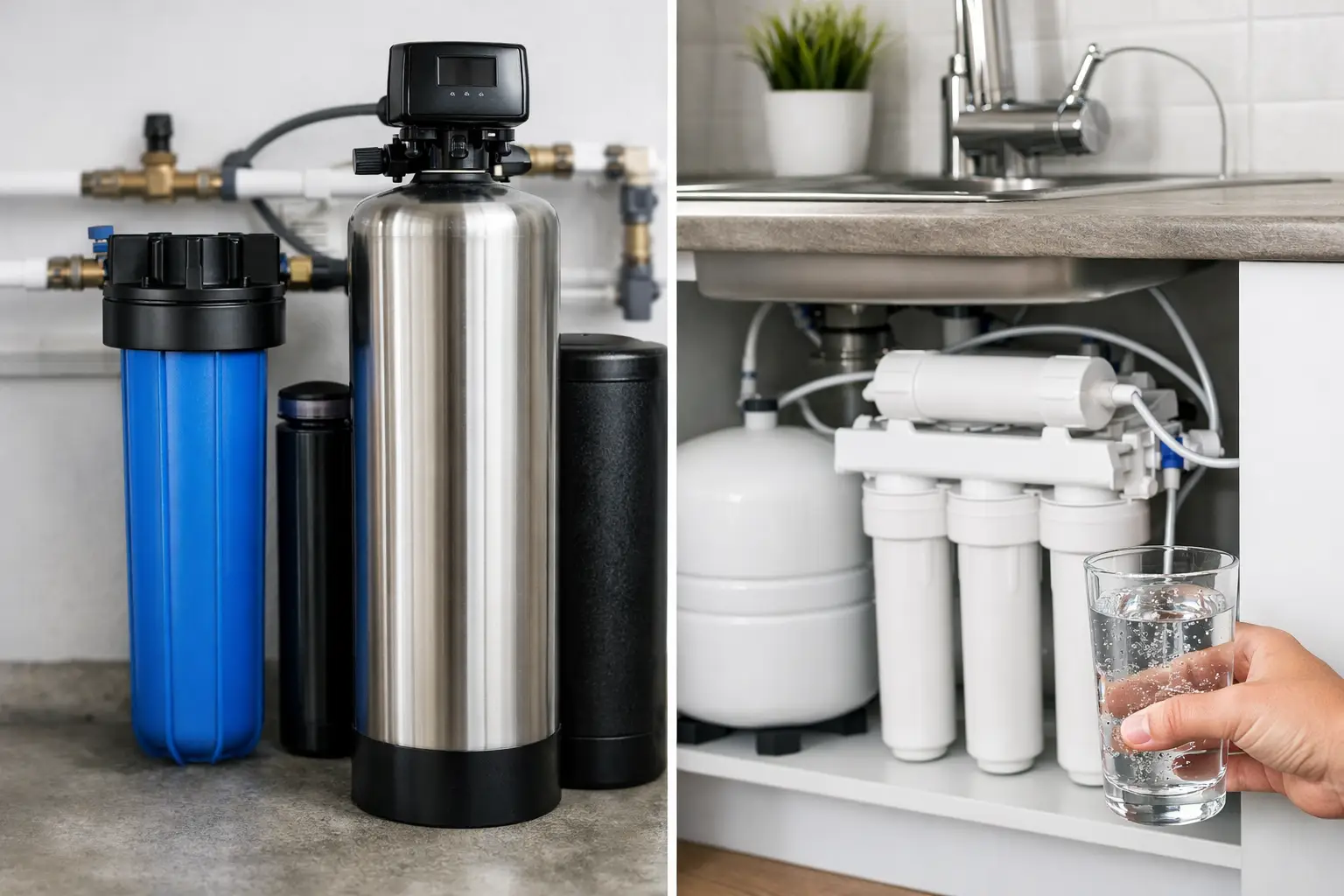
You notice it in different ways. The shower leaves your skin dry, the tap water smells like chlorine, the ice tastes off, or your coffee never comes out quite right. That is usually when the question comes up: whole house filter vs reverse osmosis – which one actually makes sense for your home?
The short answer is that they do different jobs. A whole house system treats the water coming into your home so bathing, laundry, appliance use, and general water quality improve across every tap. A reverse osmosis system is usually installed at a single point of use, most often the kitchen sink, to produce highly purified drinking and cooking water. For many homes, this is not an either-or decision. It is a matter of matching the right tool to the problem.
Whole house filter vs reverse osmosis: the core difference
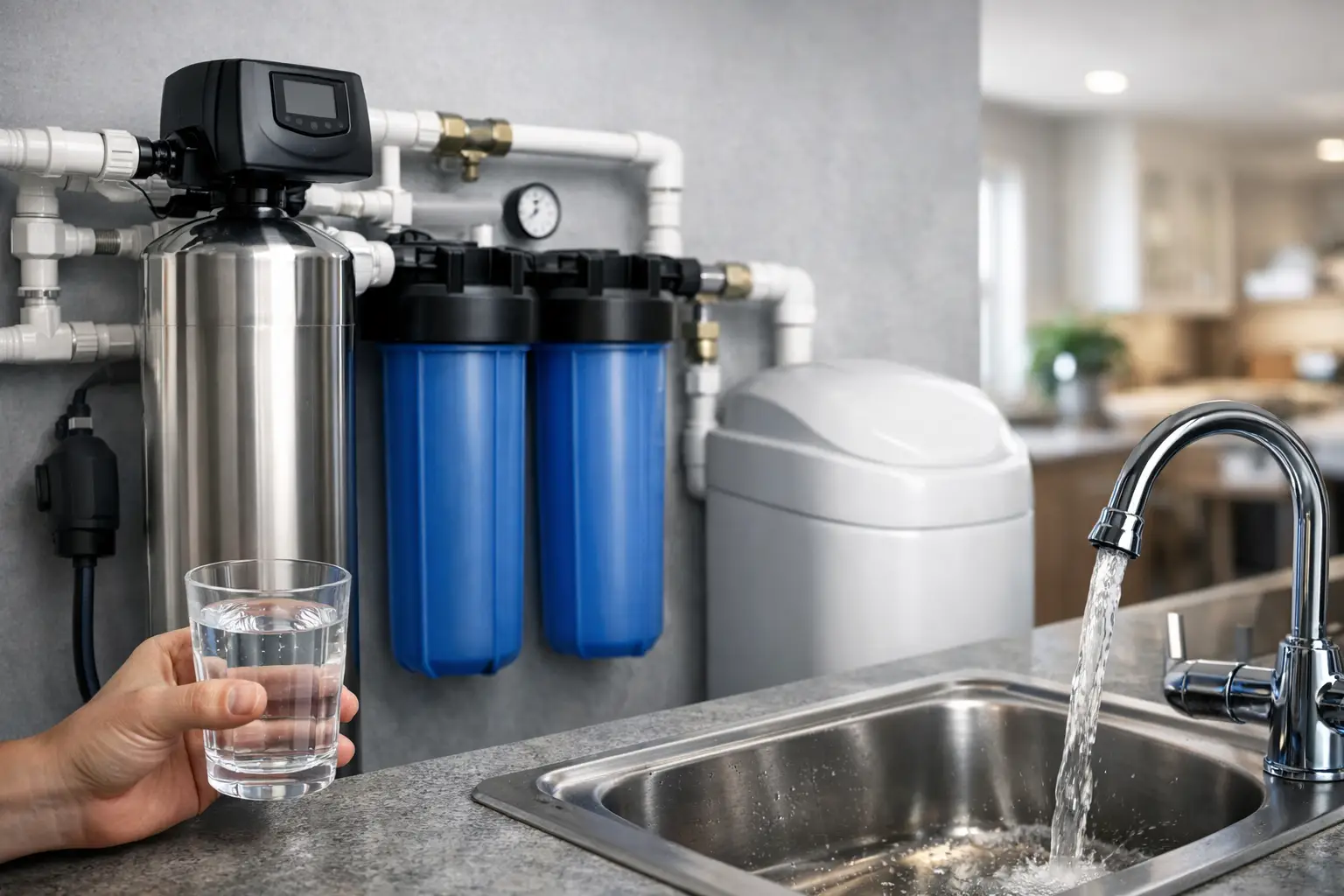
A whole house filter is installed where water enters the home. That means it treats water before it reaches your showers, sinks, toilets, water heater, and appliances. Depending on the media inside the system, it may reduce sediment, chlorine, chloramine, sulfur odor, iron, and other common water issues. The goal is broad protection and better overall water quality throughout the house.
Reverse osmosis, often called RO, works very differently. It forces water through a semipermeable membrane that can reduce a much wider range of dissolved contaminants. That includes things like nitrates, arsenic, fluoride, sodium, lead, and total dissolved solids. Because RO works slowly and creates purified water in smaller quantities, it is best suited for drinking and cooking rather than every plumbing fixture in the home.
That distinction matters. If your main complaint is harsh shower water, chlorine odor, or sediment in multiple fixtures, RO will not solve the whole problem by itself. If your biggest concern is what is in the water you drink every day, a whole house carbon filter alone may not give you the level of reduction you want for certain dissolved contaminants.
What a whole house filter does best
A whole house filtration system is about coverage and comfort. It improves the water your family uses all day, not just the water you drink at the kitchen sink.
For city water, this often means reducing chlorine or chloramine, improving taste and odor, and cutting down on chemical exposure during bathing and showering. For well water, it may mean handling sediment, iron, manganese, sulfur smell, or other source-specific issues. Some systems focus on one problem, while others combine multiple stages to address several at once.
This type of system also helps protect plumbing and appliances. Sediment and certain water contaminants can shorten the life of fixtures, stain sinks and tubs, and create maintenance headaches. If you want better water for showers, laundry, dishwashing, and water-using appliances, this is where a whole house system stands out.
That said, a whole house filter is not the same thing as a softener, and it is not the best answer for every contaminant. Hardness minerals like calcium and magnesium usually require a water softener or conditioner, not just filtration. And if your water test shows dissolved contaminants such as arsenic or nitrates, the right solution may include reverse osmosis at the tap where you drink the water.
What reverse osmosis does best
Reverse osmosis is the specialist. It is designed to produce very clean water for consumption. If you are focused on drinking water quality, taste, cooking, baby formula, pet water, or reducing specific dissolved contaminants, RO is often the better fit.
A well-designed RO system typically includes sediment and carbon prefiltration before the membrane, plus a final polishing stage after treatment. That process can remove a much broader range of impurities than standard carbon filtration alone. For homeowners dealing with high total dissolved solids, nitrates, fluoride, arsenic, or salty taste, RO is often the most effective option available for residential use.
The trade-off is scope. Reverse osmosis is not intended to supply purified water to every shower, toilet, and appliance in the house. It would be inefficient and unnecessarily expensive for that purpose. Most systems are installed under the kitchen sink or paired with a dedicated faucet, and some can feed a refrigerator line as well.
There is also maintenance to consider. RO systems need periodic filter changes, and the membrane will need replacement on a longer schedule. The exact timing depends on water quality and system design. Tankless RO systems can save space and offer strong performance, but they still require proper upkeep to continue working as intended.
Whole house filter vs reverse osmosis for common water problems
If your water smells like chlorine, tastes chemical, or leaves you wanting cleaner shower water, a whole house carbon system usually makes more sense. That is because the issue affects the entire home, not just one faucet.
If your concern is lead, fluoride, nitrates, arsenic, or high dissolved solids in the water you drink, reverse osmosis is usually the stronger option. These are contaminants that point-of-use purification is especially good at addressing.
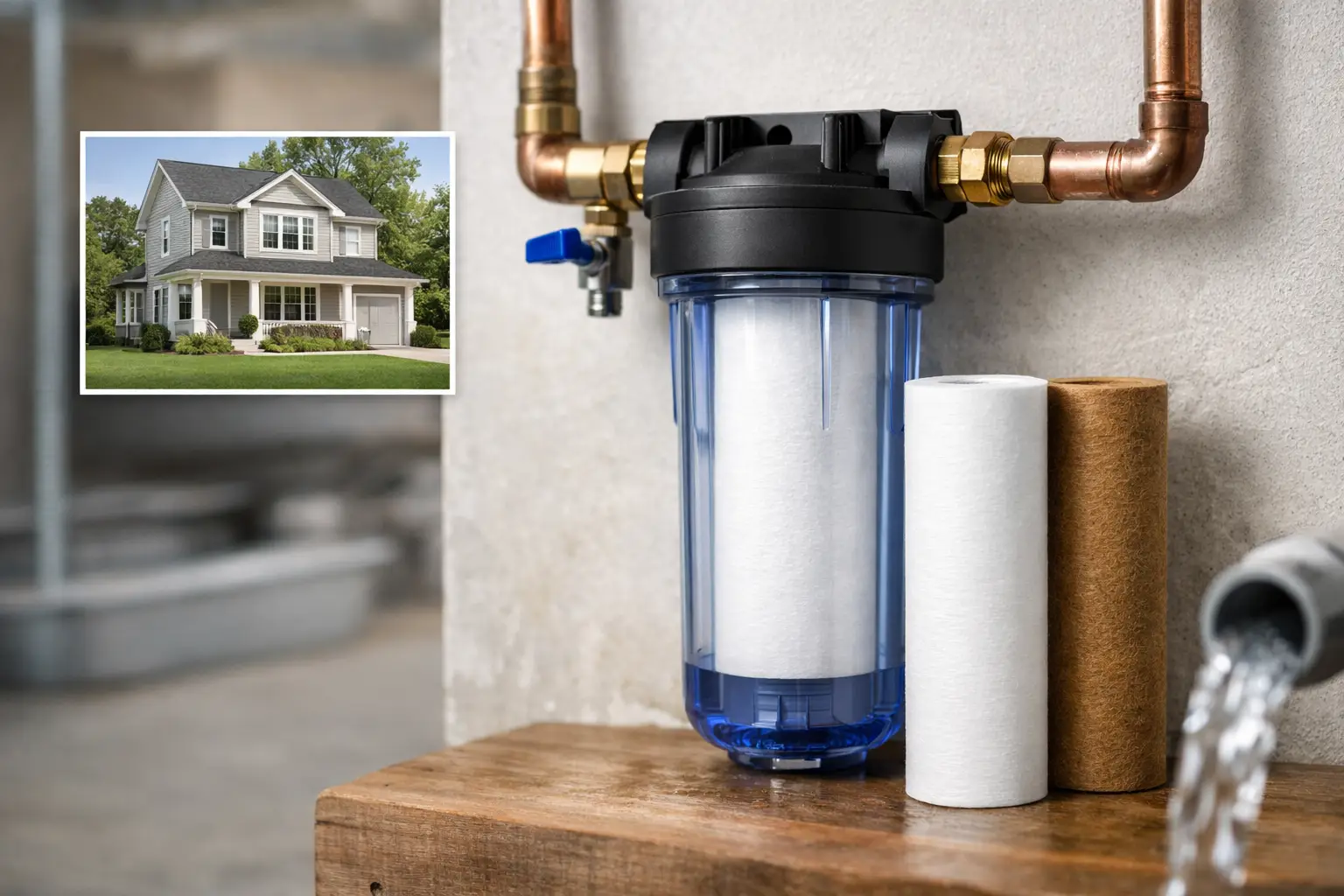
If you have visible sediment, rusty staining, sulfur odor, or well water issues, the right whole house setup may involve more than one stage. Sediment filters, backwashing media filters, iron filters, or specialty treatment may be needed before you even think about drinking water polishing at the sink.
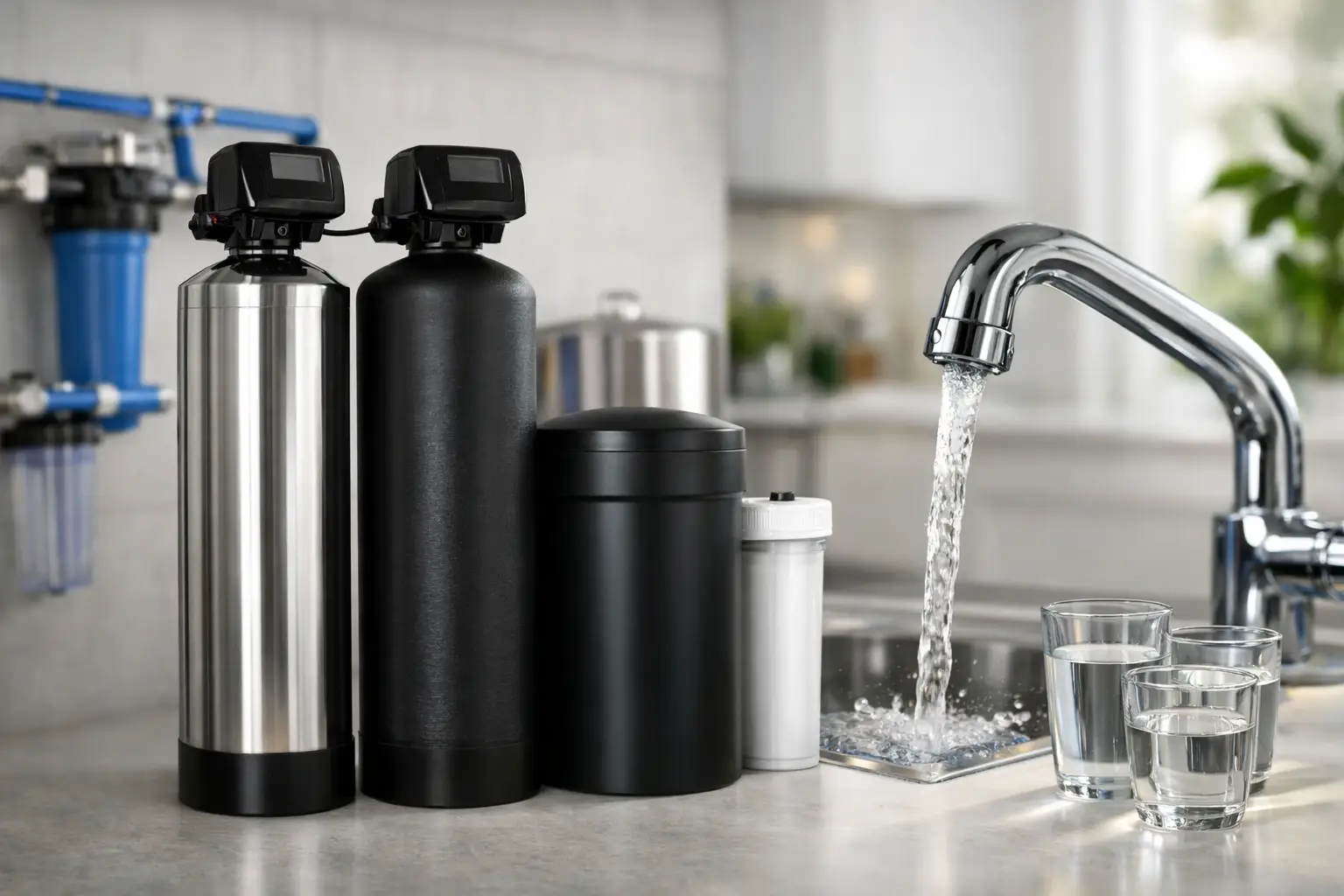
If your water is hard, neither a basic whole house filter nor a standard RO unit solves the full household problem. Hardness is best handled with a water softener for the house. In many homes, the ideal setup is a softener for hardness, a whole house filter for broader water quality concerns, and an RO system for drinking water.
When one system is enough
Sometimes one system really is enough. If you live in a home with generally safe municipal water and your main frustration is taste, odor, or chlorine exposure while bathing, a whole house filter may cover what you care about most.
On the other hand, if the rest of your household water is acceptable but you want much cleaner water for drinking and cooking, a reverse osmosis system may be all you need. This is common for homeowners who are mostly concerned about what comes out of the kitchen tap.
The right answer depends on your water source, your test results, and what problem you are actually trying to solve. Buying based on a broad promise like pure water everywhere often leads to overspending or under-solving the issue.
When combining both makes the most sense
For many families, the best answer is not whole house filter vs reverse osmosis. It is whole house filtration plus reverse osmosis.
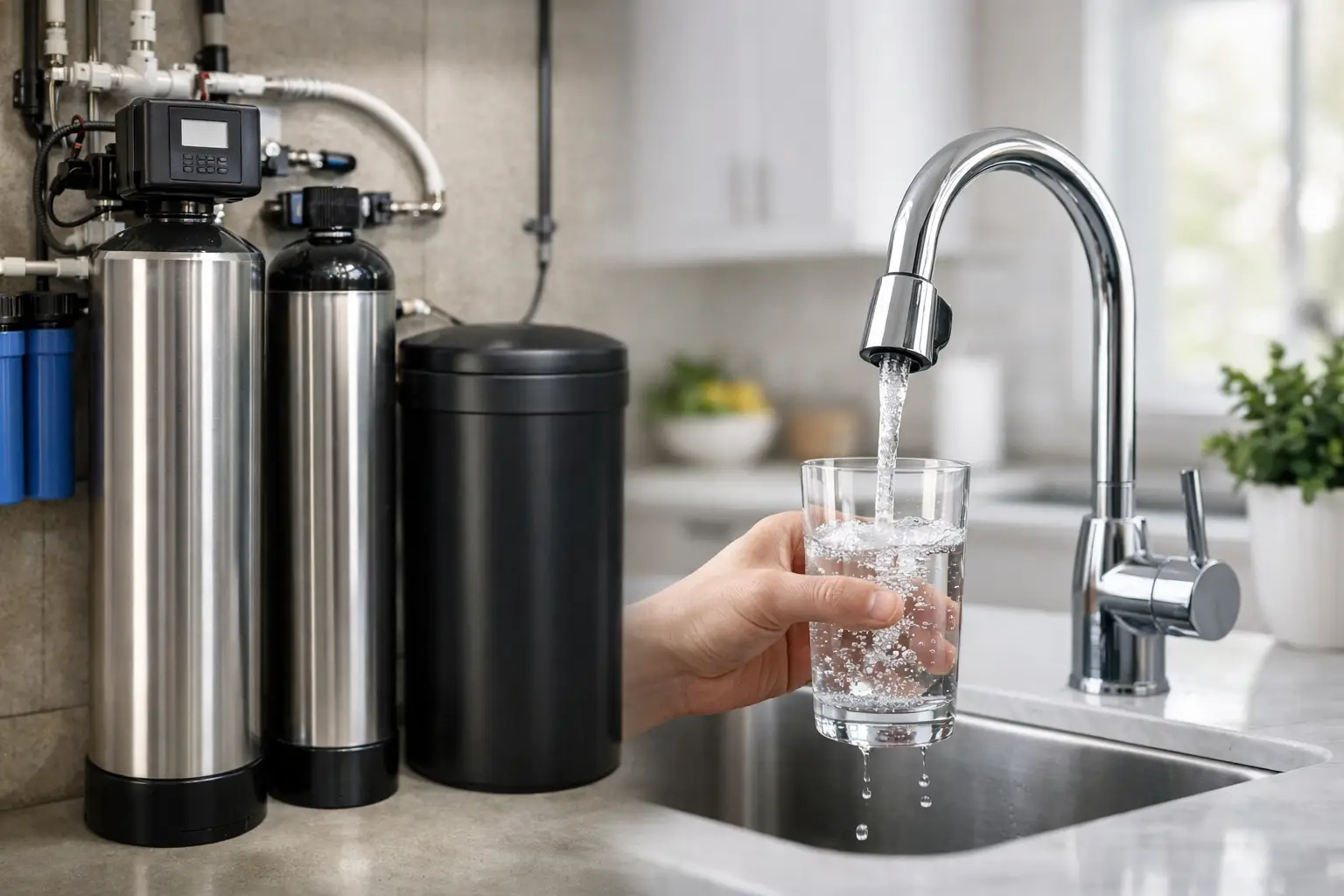
That combination gives you cleaner water throughout the home and higher-purity water where it matters most for consumption. You can reduce chlorine, sediment, and odor at every tap while also getting highly filtered drinking water at the kitchen sink. It is a practical setup because each system is doing the job it was designed to do.
This layered approach also helps with performance. When a whole house system removes sediment and chemicals upstream, it can create better conditions for downstream equipment. In some cases, pretreatment helps protect RO components and improve overall system life.
For households with children, health-focused buyers, well water users, or anyone trying to solve more than one water issue at once, the combined approach is often the most complete and cost-effective over time.
How to choose the right fit for your home
Start with your water source. City water and well water have different challenges, and those differences matter. Then look at your actual complaints. Is it taste, odor, staining, dry skin, scale buildup, or concern about a specific contaminant?
The next step is water testing. That is where guesswork stops. A good test can show whether you are dealing with hardness, chlorine, chloramine, iron, sulfur, nitrates, arsenic, pH issues, bacteria, or elevated dissolved solids. Once you know what is in the water, choosing the right system becomes much more straightforward.
This is also where honest guidance matters. The right recommendation should match the problem, not push the most expensive equipment. A homeowner dealing with shower chlorine does not necessarily need the same setup as someone with well water iron and nitrate concerns. Authentic Water USA focuses on that kind of product matching because clean, great-tasting water should not be complicated.
If you are stuck between the two, think about where the problem shows up. If it affects the whole home, start with a whole house solution. If it is mainly about what you drink, start with RO. If both are true, a combined system is often the smartest long-term move.
Better water at home is not about choosing the trendiest system. It is about solving the right problem in the right place so your water tastes better, feels better, and gives you more confidence every day.